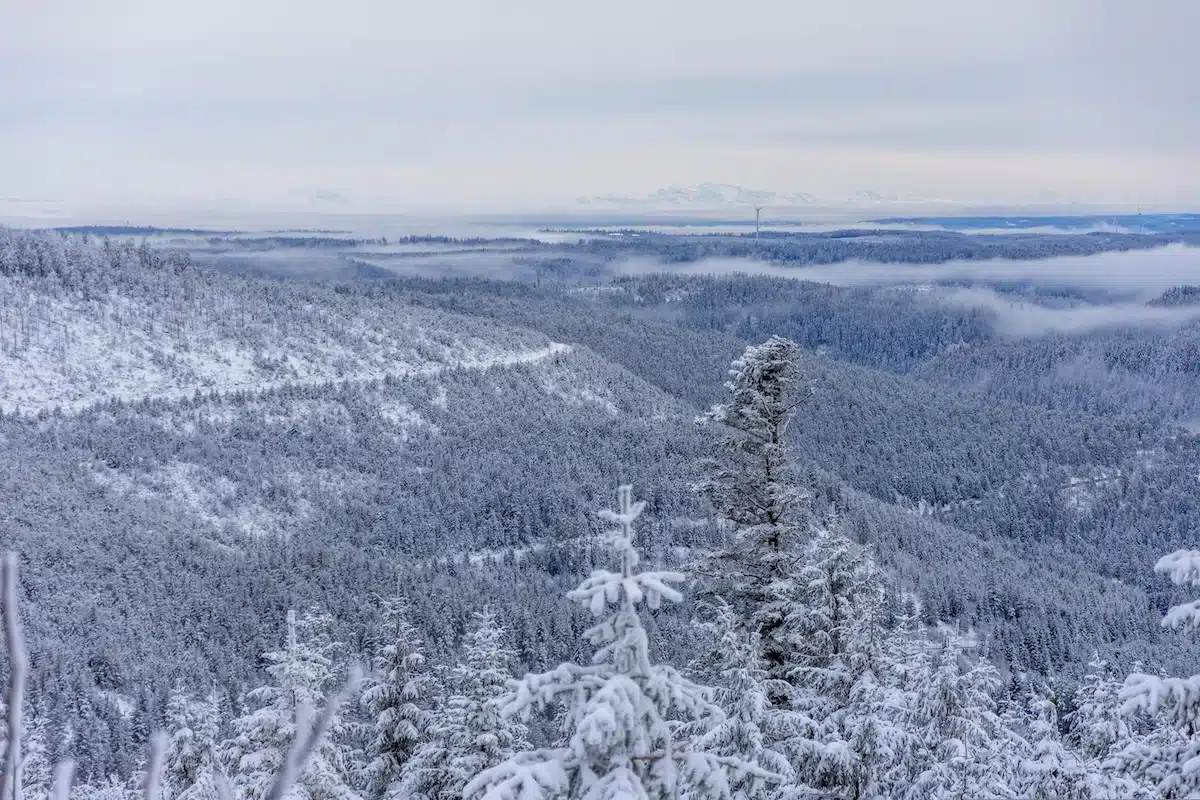
When you go snowshoeing in the Black Forest, you’ll find yourself right in the heart of the snow-covered winter landscape. The snow crunches beneath your feet, and between the fir trees, a view of the snow-capped mountains opens up. This way, you can enjoy winter nature in peace and quiet, far away from the hustle and bustle of the ski slopes.
Snowshoe hikes on the Feldberg are especially beautiful. Here you’ll find trails for all skill levels. Our three vacation homes are located right in Feldberg and offer you cozy accommodations.
Where can you go snowshoeing in the Black Forest?
From leisurely hikes through snow-covered forests to challenging hikes across scenic mountain ridges, you’ll find the perfect trails for your snowshoe hike in the Black Forest. We’ll share our best tips with you!
The Feldberg: our top choice for snowshoe hikes
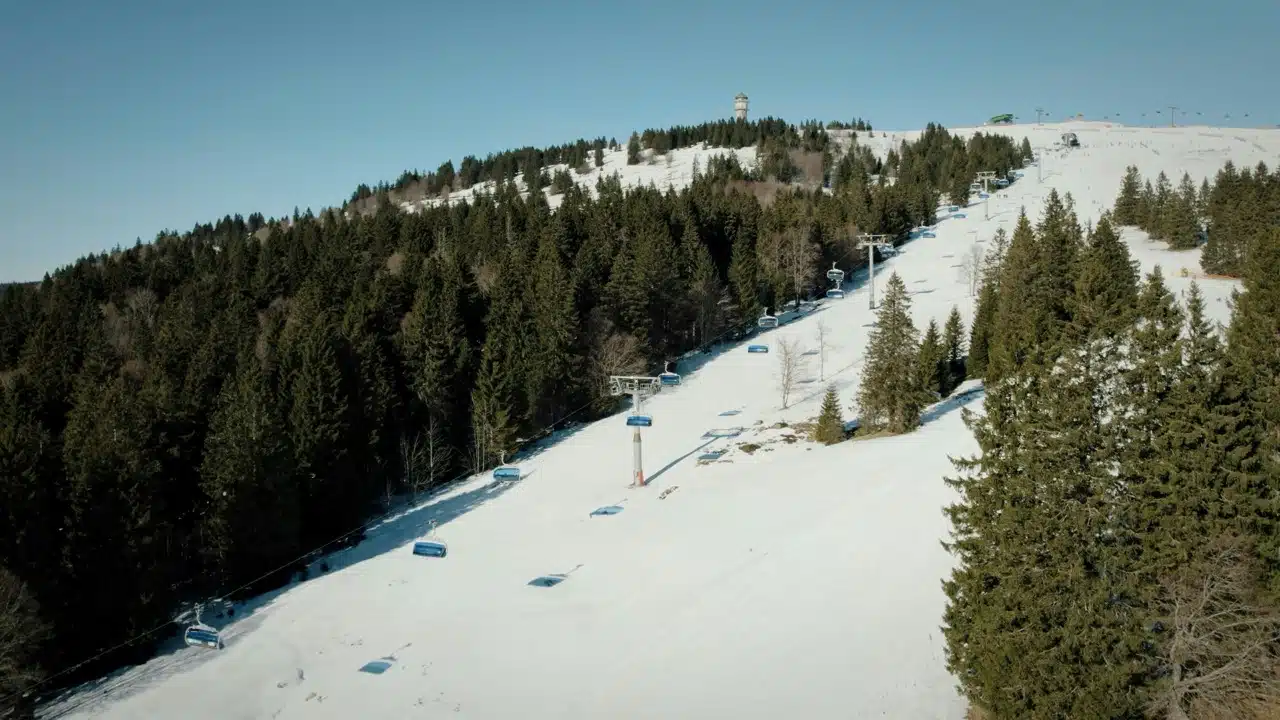
The Feldberg offers the best terrain for snowshoeing in the Black Forest. Around the region’s highest mountain, at 1,493 meters, expansive summit areas meet designated snowshoe trails. On a clear day, the view extends all the way to the Alps.
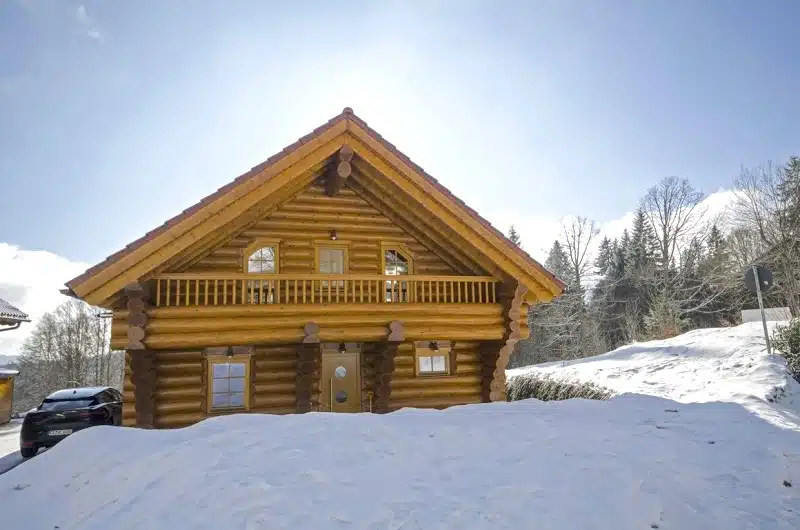
Our three vacation homes are located in Feldberg at an elevation of about 1,300 meters. This means you’ll be spending your vacation right in the heart of the winter sports area and can plan your excursions into the surrounding mountain landscape from here. Log Cabin Summer & Ski Vacations
Snowshoe Trails on the Feldberg
Two marked snowshoe trails begin at the Haus der Natur:
- Seebuck Trail: This shorter route leads up to the Seebuck. It is about four kilometers long and climbs approximately 170 meters in elevation. In suitable weather conditions, it’s a great way to get your first taste of the Feldberg.
- Gipfeltrail: This longer loop continues on to the Feldberg summit. It is about eight kilometers long and has an elevation gain of around 320 meters. Plan on spending about three to four hours and make sure you’re in good enough shape for the hike.
Other Areas for Snowshoe Hikes in the Black Forest
Even away from the Feldberg, there are interesting opportunities for snowshoe hikes in the Black Forest when there is enough snow:
- Hinterzarten: The Windecktour trail winds through winter meadows and offers views of the town.
- Schluchsee: The Jägersteig snowshoe trail leads through the winter forest around Schluchsee and Fischbach.
- Todtnauberg: A marked snowshoe trail awaits you at the Todtnauberger Horn.
- Baiersbronn: You’ll find additional snowshoe tours in the northern Black Forest. Guided hikes are also offered when snow conditions permit. snowshoe trail
For safety reasons, choose only routes that are accessible under current conditions.
When is the best time for snowshoeing in the Black Forest?
The typical season on the Feldberg runs from December to March, depending on snow conditions. During this period, the Haus der Natur offers short guided snowshoe hikes, depending on snow conditions.
The best conditions occur when there is a sufficiently thick, continuous snowpack and calm weather with good visibility. However, no specific month guarantees these conditions. Even at high elevations, mild spells can cause the snow to melt temporarily.
Therefore, be sure to check the latest snow report and weather forecast before every tour.
Who is snowshoeing suitable for?
Snowshoeing is
suitable
for people who enjoy walking. No prior experience with winter sports is required. Snowshoe hikes are therefore an excellent alternative for anyone who can’t ski.
Even older winter vacationers can enjoy winter hiking on suitable trails. However, those who aren’t steady on their feet should opt for a short, guided hike. It’s important that the route matches your fitness level.
Snowshoeing is also a great activity for families. However, children need properly fitting snowshoes, and the route should be manageable and allow for frequent breaks. Adjust your pace to match the child’s.
How strenuous is snowshoeing?
Snowshoeing is generally more strenuous than regular hiking. In deep snow, your legs have to work harder. At the same time, you have to carry the extra weight of the snowshoes with every step.
How strenuous the activity is depends largely on the terrain and the inclines. You’ll generally find it easier to make progress on an existing snowshoe trail than in fresh, deep snow. The length of the hike also affects how much stamina you’ll need.
To start out, choose a short route with little elevation gain. Walk slowly enough that you can still hold a conversation, and plan for plenty of breaks.
What should you keep in mind when snowshoeing?
Proper preparation is the key to a relaxing winter on the Feldberg. When planning snowshoe hikes in the Black Forest, you should keep the following tips in mind:
- Take the weather seriously: Visibility can suddenly and drastically deteriorate on open, high ground. Good visibility is therefore especially important for the summit trail.
- Use marked trails: Please stay on the designated and open trails and observe any closures. Wild animals need peace and quiet in winter. If they are startled, they expend extra energy that they lack in cold weather and when food is scarce.
- Avoid steep slopes: There are avalanche-prone areas on the Feldberg. Therefore, never follow other people’s tracks in unfamiliar terrain. The presence of a track does not mean the route is safe.
- Plan with daylight in mind: Start your hike early and allow extra time for breaks. Turn back in plenty of time if the weather changes or you notice your energy levels dropping. Let someone know your planned route and expected return time.
- Protect the cross-country trails: Do not run on groomed cross-country trails! Instead, use the designated crossings and be mindful of other winter sports enthusiasts there.
- Stay on track: Bring a suitable map and also download the route offline to your smartphone. Do not rely solely on cell phone reception. In an emergency, you can reach emergency services by dialing 112.
A guided tour is the best option for your first snowshoe hike in the Black Forest. This way, you’ll get an introduction to using the equipment and learn about the unique features of the terrain.
Do you have to bring your own snowshoes?
No, you can rent snowshoes on site. On the Feldberg, for example, the Haus der Natur rents out snowshoes and telescoping poles. You can find other providers in the rental overview from Hochschwarzwald Tourismus GmbH.
Check the opening hours in advance and make a reservation if necessary. For children, be sure to ask specifically for suitable models.
Bring your own hiking boots to try on. Have the bindings adjusted and ask for instructions on how to use them.
What other equipment and clothing do you need?
In addition to snowshoes, we recommend that our guests wear clothing that wicks away moisture during activity and keeps them warm during breaks. The “layering” principle has proven effective: multiple layers can be adjusted on the go to suit the conditions.
For a simple hike through the snow, your gear should include the following items, among others:
- Sturdy hiking boots: Wear warm, waterproof shoes with a sturdy shaft that extends above the ankle. The lacing should fit snugly without causing pressure points. Well-fitting hiking socks also help prevent blisters.
- Poles with large snow baskets: They make it easier to maintain your balance. Large baskets prevent the poles from sinking too deeply into soft snow.
- Layered clothing: Functional underwear made of wool or synthetic fibers is ideal as a base layer. Wear a warm layer over that. A weatherproof jacket protects you from wind and moisture. Keep extra warm clothing in your backpack for breaks.
- Appropriate pants and gaiters: Winter hiking pants that allow for freedom of movement protect your legs. Gaiters prevent snow from getting into your shoes from above.
- Warm protection for your head and hands: Bring a hat and well-insulated gloves. For longer hikes, it’s a good idea to bring a dry spare pair.
- Sun protection: Even in winter, you should pack sunglasses and sunscreen. Snow reflects sunlight very strongly.
- Drinks and Food: Pack plenty to drink, such as hot tea in a thermos. Be sure to bring something to eat as well.
- Equipment for delays and emergencies: This includes a charged cell phone and a headlamp. Also pack first-aid supplies and a bivy sack for protection against the cold.
After a snowshoe hike to the vacation home on the Feldberg
After a day in the snow, returning to the warm vacation home is especially nice. In our three vacation homes on the Feldberg, you can spend the evening by the wood-burning stove or relax in your own sauna. Each cottage offers 184 square meters of living space, providing plenty of room for enjoying your vacation together.
This way, you can combine snowshoeing in the Black Forest with relaxing moments in your luxurious and cozy Chalet.
Check the availability of our vacation homes on the Feldberg now and book your winter vacation.